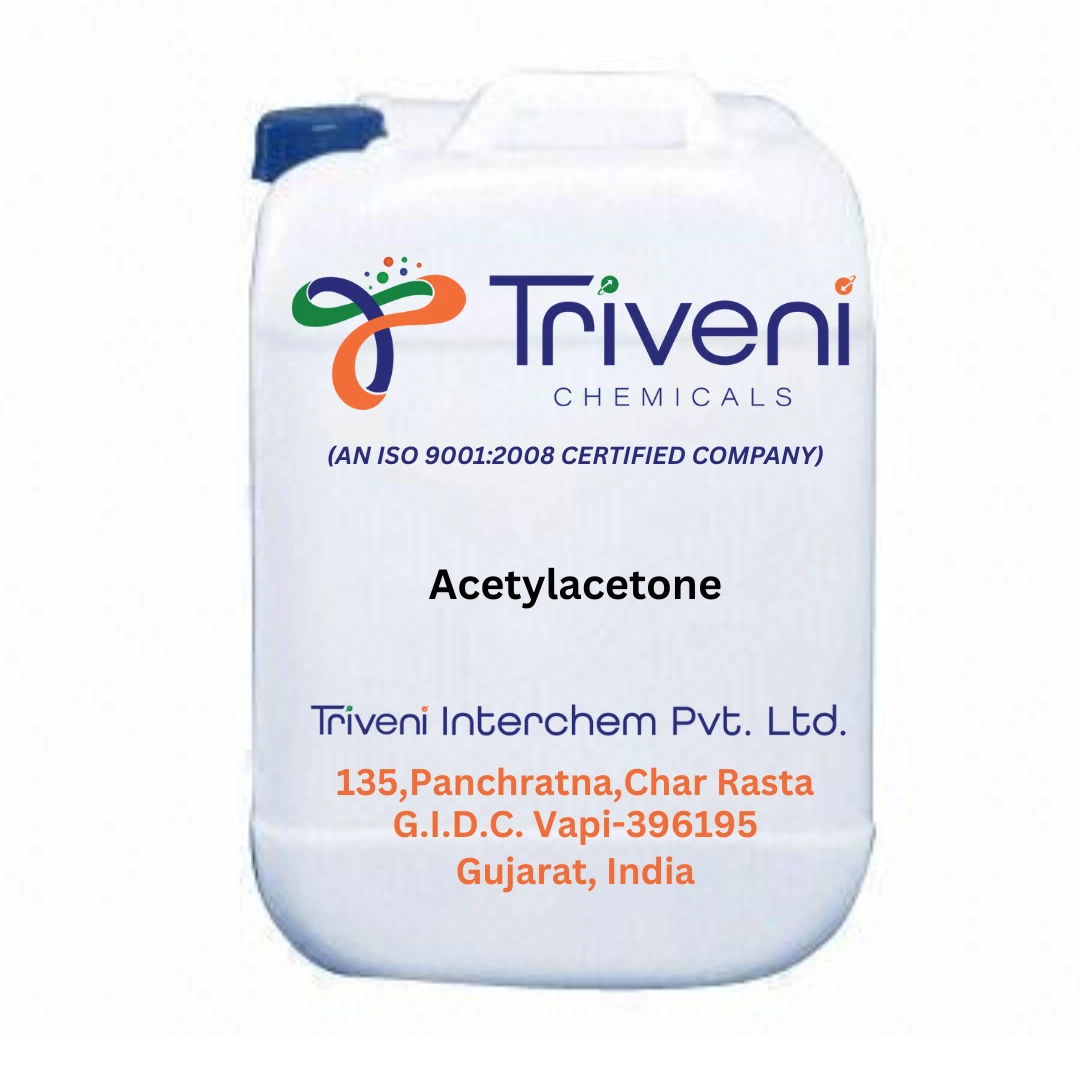


Acetylacetone | 123-54-6
Cas No :
123-54-6
Synonyms :
Form :
Liquid
Molecular Weight :
100.12 g/mol
Molecular Formula :
C5H8O2
Boiling Point :
140.4 °c
Melting Point :
-15 °C
Flash Point :
30 °C
Solubility :
Soluble in water; soluble in most organic solvents
Description :
Acetylacetone Supplier and Exporter for the UK
Chemical Bull is a Acetylacetone supplier, distributor, wholesaler and exporter serving UK buyers. We support sourcing enquiries from fine chemical manufacturers, catalyst producers, resin formulators and reagent distributors. Our team checks available material against your required grade, approved specification and purchasing quantity.
Send your application, quantity and delivery postcode to request Acetylacetone bulk pricing, technical documents and a supply quotation. Include your manufacturer preferences and purchasing timeline so the offer can address the material you actually need.
Quick Buyer Answer
Acetylacetone, CAS 123-54-6, is available commercially in grades that require application-specific selection. Acetylacetone is an organic beta-diketone, also called 2,4-Pentanedione. It functions as a ligand in metal-complex chemistry and as a synthesis intermediate. Selected commercial products are used as promoters in approved unsaturated polyester resin curing systems. UK procurement teams should provide the required specification, quantity and documentation needs when comparing offers.
What Is Acetylacetone?
Product: Acetylacetone.
CAS number: 123-54-6.
Synonyms or related identity terms: 2,4-Pentanedione.
Molecular formula: C5H8O2.
Use the complete product name and grade on your purchase request. Synonyms help identify the substance, but they do not establish equivalent quality, origin or application approval between commercial products.
Acetylacetone Applications
Metal Complex and Catalyst Manufacturing
Acetylacetone is used to prepare metal acetylacetonates and related coordination compounds. Catalyst and intermediate producers should specify the required assay and impurity profile. Trace contaminants can matter to the downstream product, so acceptance limits should follow the approved manufacturing route.
Resin Formulation Requirements
Specified acetylacetone products act as promoters in certain peroxide and cobalt-based polyester cure systems. Resin buyers should confirm compatibility through manufacturer guidance and established formulation assessment. This application does not make every acetylacetone grade a ready-to-use curing package.
Fine Chemical and Laboratory Synthesis
Chemical producers and research laboratories use Acetylacetone as a building block or ligand in suitable synthesis work. Specify whether reagent or production material is required. Include the analytical limits needed for the intended transformation and final product.
Grade and Specification Selection
Review assay, water, colour and relevant organic impurities. Include metal limits where catalyst or coordination chemistry requires them. For resin applications, identify the exact approved promoter specification. Purchase decisions should reflect the actual grade and process rather than a broad solvent description.
Include acceptance limits and test methods with your enquiry. If your business has already approved a manufacturer or reference sample, identify it before commercial evaluation. Compare quotations against the same specification and supplied composition rather than treating a higher assay figure as proof of better application performance.
Bulk Packaging and Supply Support
Chemical Bull accepts Acetylacetone bulk supply and export enquiries for the UK. Available pack sizes, minimum order quantities and lead times are confirmed against the offered source. Tell us whether the requirement is a development purchase, production order or scheduled repeat supply.
For a relevant quotation, provide the product name, CAS number, grade, specification, quantity, application, packaging preference and destination. Include your UK delivery postcode or nominated port and required delivery date. Ask the quotation to state the manufacturer, supplied grade, packaging, delivery basis and estimated lead time.
The Acetylacetone price depends on the material offered, specification, quantity and commercial terms. Where additional testing or declarations are required, identify them at the start so they can be included in the supply discussion.
Acetylacetone MSDS, SDS and Technical Documentation
Request the Certificate of Analysis (COA), current Safety Data Sheet (SDS), product specification and available Technical Data Sheet (TDS). Buyers searching for an MSDS should request the current supplier-issued SDS for the actual product and grade.
Review batch traceability and relevant analytical results against your approved limits. Use the SDS and manufacturer guidance to assess handling, storage, packaging and transport arrangements. Share any additional documents required by your quality team or receiving site before confirming the order.
Frequently Asked Questions
What is the CAS number of Acetylacetone?
The CAS number is 123-54-6. Include the required grade and specification alongside this identity when ordering.
Is Acetylacetone the same as 2,4-Pentanedione?
Yes. Both names refer to CAS 123-54-6. Include the CAS number and required grade when requesting a quotation.
What should UK buyers specify before ordering?
Provide the approved grade, acceptance limits, intended application and quantity. Include manufacturer preferences, packaging and qualification requirements.
What technical documents can I request?
Ask for the COA, current SDS, product specification and available TDS. Identify any additional quality or application documents needed for approval.
How can I request bulk pricing for UK delivery?
Send Chemical Bull your specification, quantity and UK destination. Include your required delivery date so availability and commercial terms can be checked.
Related Chemical Sourcing
For separate purchasing requirements, explore Allyl Chloride and Butylated Hydroxytoluene. Select each material against its own function and approved specification. These links do not imply that the materials are substitutes.